
Cohesive coaching requires a mental component
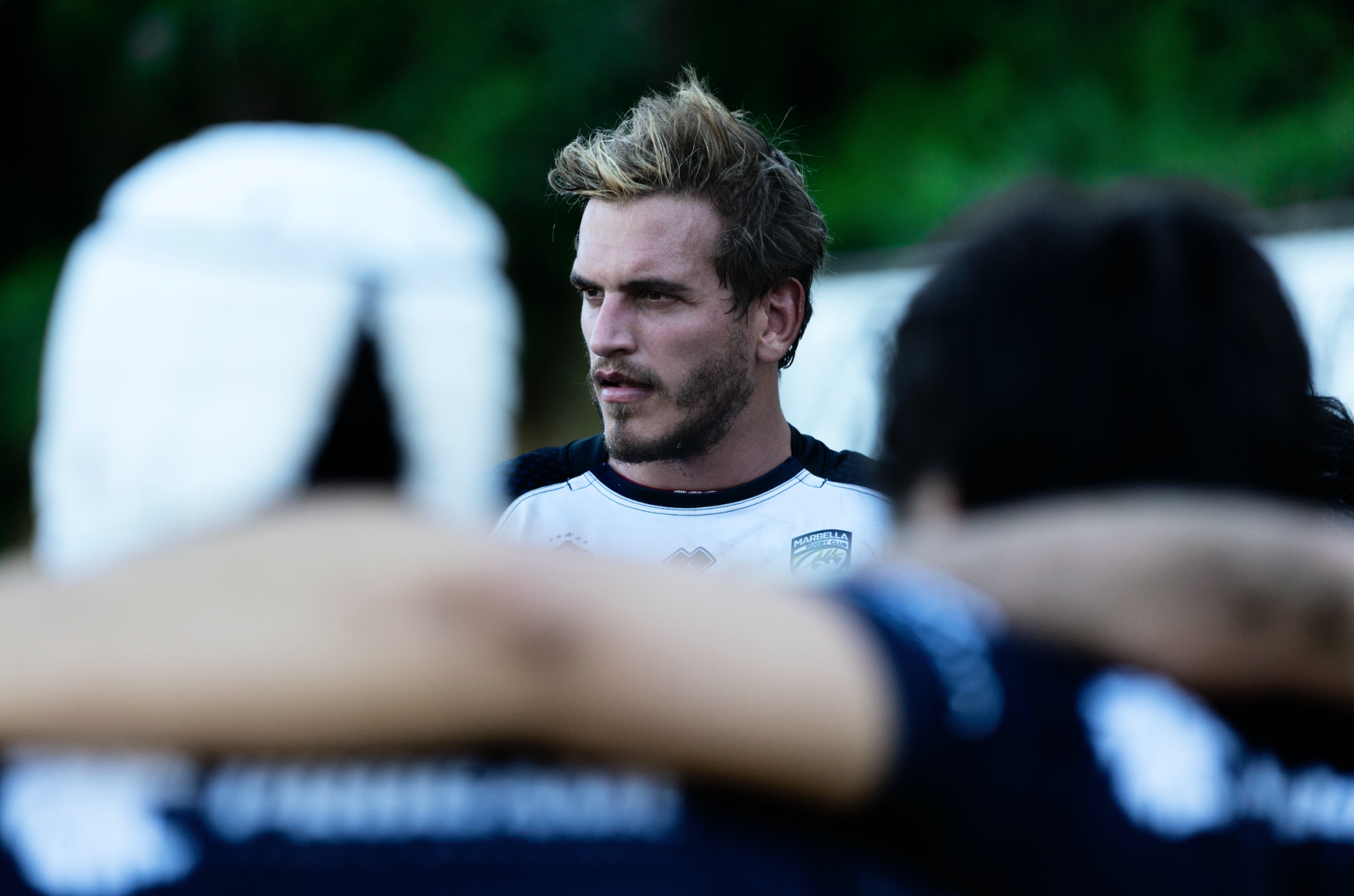
When it comes to developing sustained success in sports, being physically fit is only half the story.
It’s commonly assumed that any level of success in sport is simply ‘practice makes perfect’; that repetition is all that’s needed. Footballers spend hours playing keepy-uppy, golfers are always on the practice green, and so on. What’s become popular recently, however, is the ‘cohesive coaching’ approach, providing a broader, more encompassing style.
Repetition isn’t enough
People imagine cohesive coaching is why we see Formula 1 drivers in the gym, or hockey players spending hours in the pool – and while overall fitness is important, being physically fit is only half the story of sporting success.
While diverse training regimes have given sportspeople huge gains, the value of ongoing mental skills development is a critical component of sustained success and should underlie all physical sporting actions. Each kick of a football, pass of a rugby ball or swing of a bat should be based on good decision-making processes. Repetition isn’t enough to guarantee success because it doesn’t account for skilled opponents, cheering crowds or even just the adrenaline of competitive sport.
Understanding flight or flight responses
The mental pressures during sport come from two different places in the brain; the amygdala and the frontal cortex. The amygdala controls ‘fight or flight’ leftover from our ancestors – stimulating the body with adrenaline and sending oxygen rich blood to fire up the muscles, which is useful when running away from a sabre-toothed tiger. Unfortunately, this is at the expense of the frontal cortex, which controls rational decisions to select the best outcome.
The muscles that are pumped full of blood and adrenaline are straining at the leash to explode, but releasing them and ignoring all the information available is usually a bad idea. Even in professional sports, we frequently see this – the basketball player who fumbles the ball while under pressure from an opponent or the final penalty in a shoot-out is missed because the player crumbles under the pressure of the crowd and the situation.
Adding mental training into the mix
This is where cohesive coaching really steps in and why a training plan without mental elements can never be fully rounded. Good mental processes are just as important as physical prowess and it is possible to teach the brain to use all of the information available, select the best plan and only then let the muscles unleash all that energy!
Good decision-making processes are important in all sports, whether team or single pursuits and working on them can not only help you decide the best course of action to succeed, but can also teach you how to react when things aren’t going your way. The fear of losing is often a source of pressure, so whether you’ve just gone 2-0 down, fallen off the pace of the leading cycle pack or lost the first set in straight games, being scared of losing can trigger panicked and less rational courses of action, which lead to worse and worse outcomes.
Breaking this cycle, getting rid of unfocused and flustered thoughts and getting back to a cool, rational series of decisions is known as Red2Blue Head thinking and it forms the backbone of how to mentally prepare to return to form when things aren’t going your way.
Every sport around has a tactical element, which means that every sport involves a mental component. Taking a fully cohesive approach involves paying particular attention to skills that don’t strictly relate to training the body, but by boosting them, you could see incredible results!

Get in touch
-
Gazing Limited. Regal House, 70 London Road, Twickenham, Middlesex TW1 3QS
-
+44 (0)20 8568 0298
Our Newsletter
Sign up to our newsletter for updates and inspiration.
Thank you!
Copyright © Gazing Limited 2025
We help you accelerate impact through online education
We are an eLearning platform people trust to get educated and inspired.

Maria Tulley took up golf at the age of 11 and went on to win several junior competitions, earning selection for the England U16 Girls Elite Squad. After studying a Sports Studies BTEC National Diploma at Penwith College, she turned professional in 2005 and spent eight years at West Cornwall Golf Club as assistant professional while completing her PGA degree at the University of Birmingham.
Maria enjoyed considerable success as a player, including victory in the Ladies Tartan Tour event in Scotland, the Virgin Atlantic Order of Merit event (played against a field of men) and Europe's biggest ladies pro-am in 2018. She also became the first woman in 103 years to win the SPGU Championship. The highlight of her career came in October 2019, when she was one of just five players selected to represent Great Britain & Ireland in the inaugural Women's PGA Cup in Austin, Texas, playing alongside Heather MacRae, Ali Gray, Hazel Kavanagh and Suzanne Dickens under captain Cathy Panton-Lewis.
Since then, Maria has continued to compete regularly on the WPGA Series and Rose Ladies Series while building a career in coaching. Now a PGA Professional and Performance Coach, she is also a qualified Red2Blue mindset coach, and worked with PGA Tour golfer Harry Hall in the early stages of his career.
Now 19 years old, Immy is a rising star on the international golf scene. Her early career highlights include becoming the Cheshire U14 County Champion at just 10 years old in 2017, the Welsh Northern Counties U14 Champion that same year, finishing third in the Wee Wonders National Championship at St Andrews, and representing Cheshire County U18s.
From the age of 11, Immy has been part of the England Golf Development pathway as a member of the England U18 NW Regional Squad. She has been selected to represent Team England on six occasions at both U16 and U18 level. She is also a two-time Cheshire U18 County Champion and placed fourth at the U18 English Girls Stroke Play Championship.
Ranked third in England in her age category, Immy was offered a 100% scholarship to the College of Charleston in South Carolina, a top-40 Division 1 college, where she enrolled in 2025. In her freshman season, her team won the CAA Championship, their record seventh title, and were subsequently selected for the NCAA Louisville Regional.
At just 17 years old, Imogen Hall has established herself as a promising young athlete in international amateur golf, currently based in Dubai. Imogen has consistently performed at the highest levels of junior and amateur golf. Her notable achievements include a top 10 finish at the English Amateur and winning the Girls WAGR title at the Faldo Series.
A dedicated student-athlete, Imogen maintained a 3.7 GPA throughout her GCSEs, demonstrating the same discipline in the classroom as she does on the course.
Her performance has earned her a Division 1 scholarship to Grand Canyon University (GCU), where she is committed to join the Women’s Golf team in 2027.
As a Red2Blue athlete, Imogen is a strong advocate for mental performance training. She utilizes the Red2Blue framework to manage pressure and maintain a "Blue” mindset - focusing on being relaxed, focused and confident to ensure her process remains consistent regardless of the stakes.
Career Highlights:
WHS: +1.9
WAGR: 1535
Committed: Grand Canyon University (2027)
Key Wins: Faldo Series (WAGR), Top 10 English Amateur
WAGR: 1535
Committed: Grand Canyon University (2027)
Key Wins: Faldo Series (WAGR), Top 10 English Amateur
Gus spent many years working full time for the International Tennis Federation (ITF), a role that took him across the globe presenting to international audiences. He now runs GTC Tennis Academy and Consultancy in Miami, where he coaches players and also educates coaches, parents and administrators. He is co-founder of The Sport Culture, which provides consulting and support services focused on sport and on performing successfully under pressure.
A Red2Blue Certified Advanced Coach, Gus builds mindset training into all of his programmes. He uses it to sharpen the attention of children and young players during training, to help professionals make better decisions in high-pressure moments, and to give organisations and academies a shared language for their goals. His guiding belief is that mindset is a skill to be learned and developed, not a limiting factor.
Gus is passionate about sports training and education centred on inclusion, long-term development and successful performance under pressure.
Denis came through the youth ranks in Portugal, including spells in the Dragon Force programme and at Padroense, before joining Famalicão. At 17 he earned a call-up to Japan's Under 19 squad, having established himself as a regular starter for Famalicão's Under 19 team.
He was part of a historic season for the club's Under 19s, scoring the winning goal against Boavista that extended Famalicão's unbeaten run to 14 matches in the U19 National Championship Division 1. The team went on to qualify for the final phase of the National Championship alongside Sporting, Benfica, Porto and Braga.
Since then, Denis has stepped up to Famalicão's Under 23 team, where he continues to develop as a right-footed attacking player.
As a 16-year-old, Harrison was part of the New Zealand Under 17 squad that won the 2023 OFC U-17 Championship in Fiji and qualified for the FIFA U-17 World Cup. Up against nine other nations for two World Cup places, New Zealand won both of their group games, against New Caledonia and American Samoa, before beating Vanuatu in the quarter-final and Fiji in the semi-final to secure their place at the World Cup. They then went on to lift the trophy, beating New Caledonia 1–0 in the final to claim New Zealand's ninth Oceania U-17 title.
Since then, Harrison has built his senior experience in the New Zealand game, with spells in the Wellington Phoenix reserves and at Upper Hutt City before joining Auckland FC.
Erica uses Red2Blue to manage the weight of expectation that comes with being selected so young, and to stay mentally sharp in high-pressure, high-visibility matches.